Now Accepting New PatientsAppointments available — book your first visitBook now Mon–Wed 9–5 · Fri 8–2801-893-1010
← All conditions

Shoulder, elbow, wrist & hand · Patient guide

Elbow Pain

Elbow pain can interfere with gripping, lifting, throwing, racquet sports and everyday work. The location of the pain—and whether numbness or weakness is present—helps narrow down the likely source.

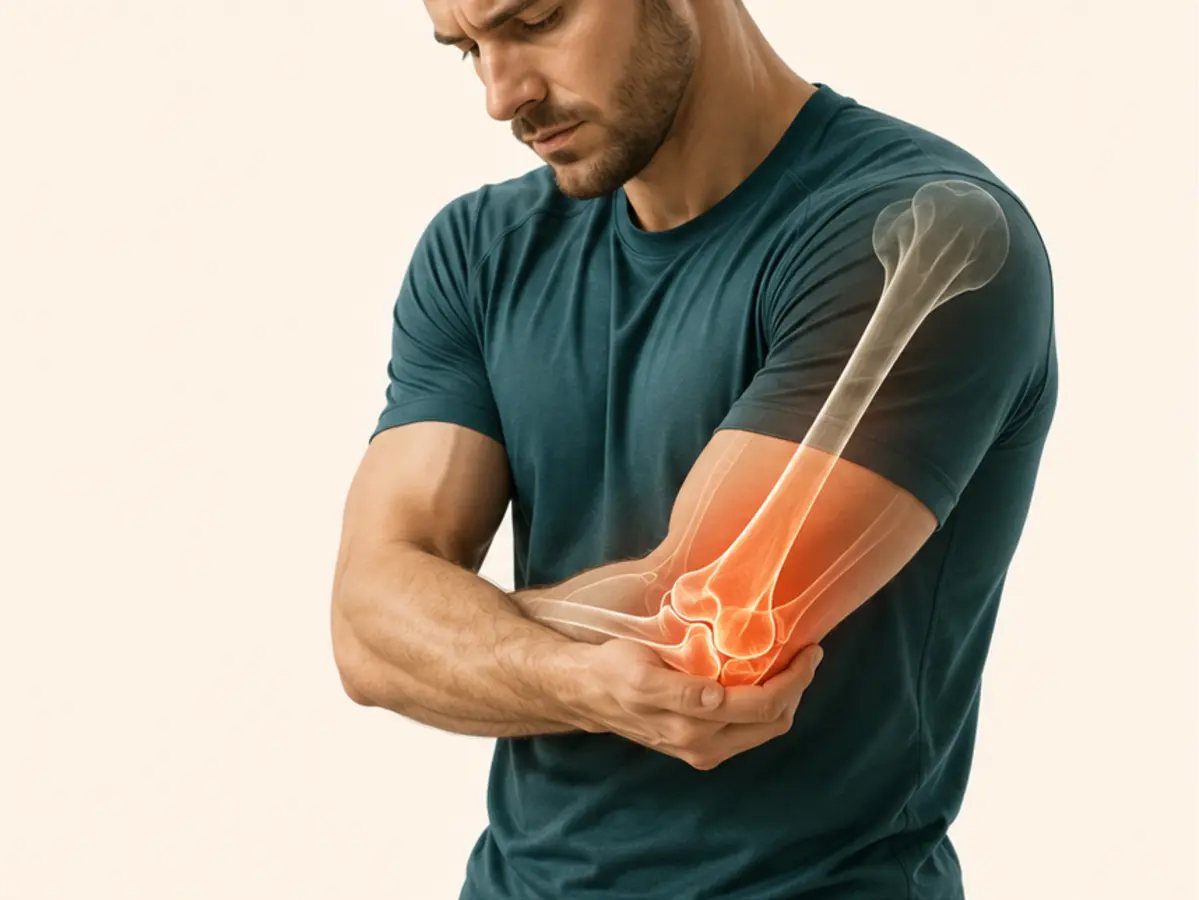
Healthcare illustration of an adult with elbow pain for chiropractic care in Lehi Utah

The basics

What It Is & How Common It Is

Elbow pain can interfere with gripping, lifting, throwing, racquet sports and everyday work. The location of the pain—and whether numbness or weakness is present—helps narrow down the likely source.

Outer-elbow pain and reduced grip are common with forearm-tendon overload, but tennis is only one possible trigger. Work, tools, lifting, pickleball, weight training and other repetitive tasks may create similar demands. Inner-elbow pain, swelling, locking or tingling into the ring and little fingers suggest different possibilities that deserve a focused examination.

Health information source: AAOS tennis elbow overview

Common questions

Elbow Pain FAQs

Do you have to play tennis to develop tennis elbow?

No. Repeated gripping, lifting, tool use, weight training, pickleball and many work tasks can overload the forearm tendons on the outside of the elbow.

Can elbow pain cause tingling in the hand?

Irritation of the ulnar nerve near the inner elbow may cause tingling in the ring and little fingers. Neck and wrist problems can also create hand symptoms.

Should I completely rest an irritated elbow?

Complete rest is not always necessary. Reducing the clearly aggravating load while maintaining comfortable movement and gradually rebuilding forearm strength is often more practical.

When should elbow pain be evaluated promptly?

Prompt evaluation is important after major trauma or with deformity, marked swelling, redness and fever, inability to move the elbow, or progressive weakness or numbness.

Practical next steps

What You Can Do—and How We Can Help

At home

Start With Sensible Self-Care

  • Temporarily reduce the grip or movement that clearly aggravates it
  • Keep the elbow and wrist moving comfortably
  • Avoid repeatedly testing painful lifting
  • Rebuild forearm strength gradually
At our Lehi office

Care Built Around Your Findings

  • Differentiate tendon, joint and nerve patterns
  • Assess grip, wrist, elbow, shoulder and neck
  • Use appropriate joint and soft-tissue care
  • Create a progressive loading plan or refer when needed

Safety first

When to Get Medical Help Quickly

Seek prompt evaluation after major trauma, with deformity, severe swelling, redness and fever, inability to move the elbow, progressive weakness or numbness, or a cold or pale hand.

A clear plan starts with an evaluation

Ready to Talk About Your Elbow Pain?

We’ll listen, assess your movement and explain whether care at our office is a good fit.