Now Accepting New PatientsAppointments available — book your first visitBook now Mon–Wed 9–5 · Fri 8–2801-893-1010
← All conditions

Head & neck · Patient guide

Whiplash

Whiplash is a neck injury caused by rapid acceleration and deceleration, most often during a motor-vehicle collision but also possible after a sports collision, fall or other sudden impact.

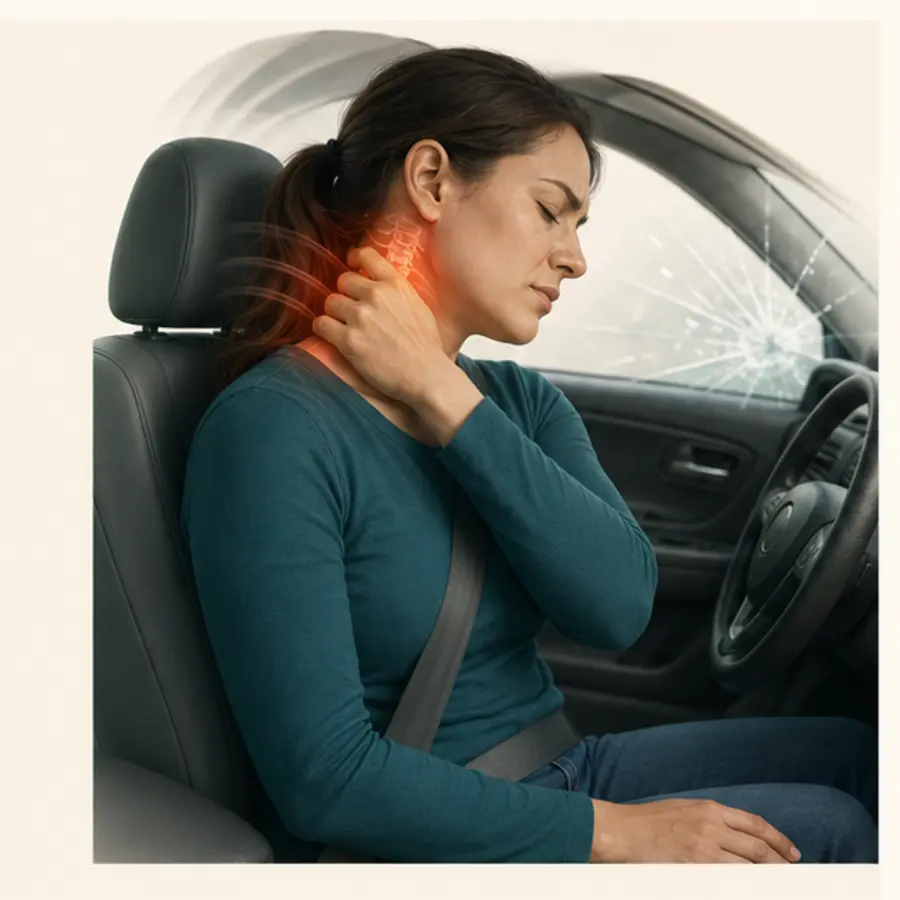
Medical illustration of whiplash neck injury after an auto accident in Lehi Utah

The basics

What It Is & How Common It Is

Whiplash is a neck injury caused by rapid acceleration and deceleration, most often during a motor-vehicle collision but also possible after a sports collision, fall or other sudden impact.

Because whiplash symptoms can overlap with concussion and other injuries, the evaluation considers how the collision occurred, when symptoms began and whether headache, dizziness, numbness, weakness, balance problems or cognitive changes are present. Imaging is not automatic for every case, but referral or testing may be appropriate when the examination suggests a fracture, neurologic injury or concussion.

Health information source: Mayo Clinic whiplash overview

Common questions

Whiplash FAQs

Can whiplash symptoms begin the day after an accident?

Yes. Pain, stiffness, headache and other symptoms may develop over the hours or days following a collision.

Do I need imaging after a rear-end collision?

Not everyone needs imaging. The collision history, examination, age, symptoms and warning signs help determine whether X-ray, CT, MRI or medical referral is appropriate.

Can whiplash cause headaches or dizziness?

Headache and dizziness can occur after a collision, but they may also suggest concussion or another injury. Report these symptoms so they can be screened appropriately.

Does Utah PIP cover whiplash treatment?

Utah personal injury protection may help pay for reasonable and necessary care regardless of fault, subject to the policy, available benefits and claim approval. Coverage should be confirmed for each claim.

Practical next steps

What You Can Do—and How We Can Help

At home

Start With Sensible Self-Care

  • Get appropriately evaluated after a collision
  • Use comfortable, gentle movement as advised
  • Avoid repeatedly testing painful end ranges
  • Track headache, dizziness, sleep, balance and memory changes
At our Lehi office

Care Built Around Your Findings

  • Review the collision, symptom timing and functional changes
  • Screen neck motion, nerves and possible concussion symptoms
  • Use gentle, staged care based on injury severity and comfort
  • Document findings and coordinate referral when appropriate

Safety first

When to Get Medical Help Quickly

Call 911 or seek urgent medical care for loss of consciousness, increasing confusion, repeated vomiting, severe or worsening headache, weakness, difficulty walking, slurred speech, seizure or severe midline neck pain after a collision.

A clear plan starts with an evaluation

Ready to Talk About Your Whiplash?

We’ll listen, assess your movement and explain whether care at our office is a good fit.