Evaluate
We first determine whether your symptoms and examination fit this approach.
Gentle table-assisted spinal movement
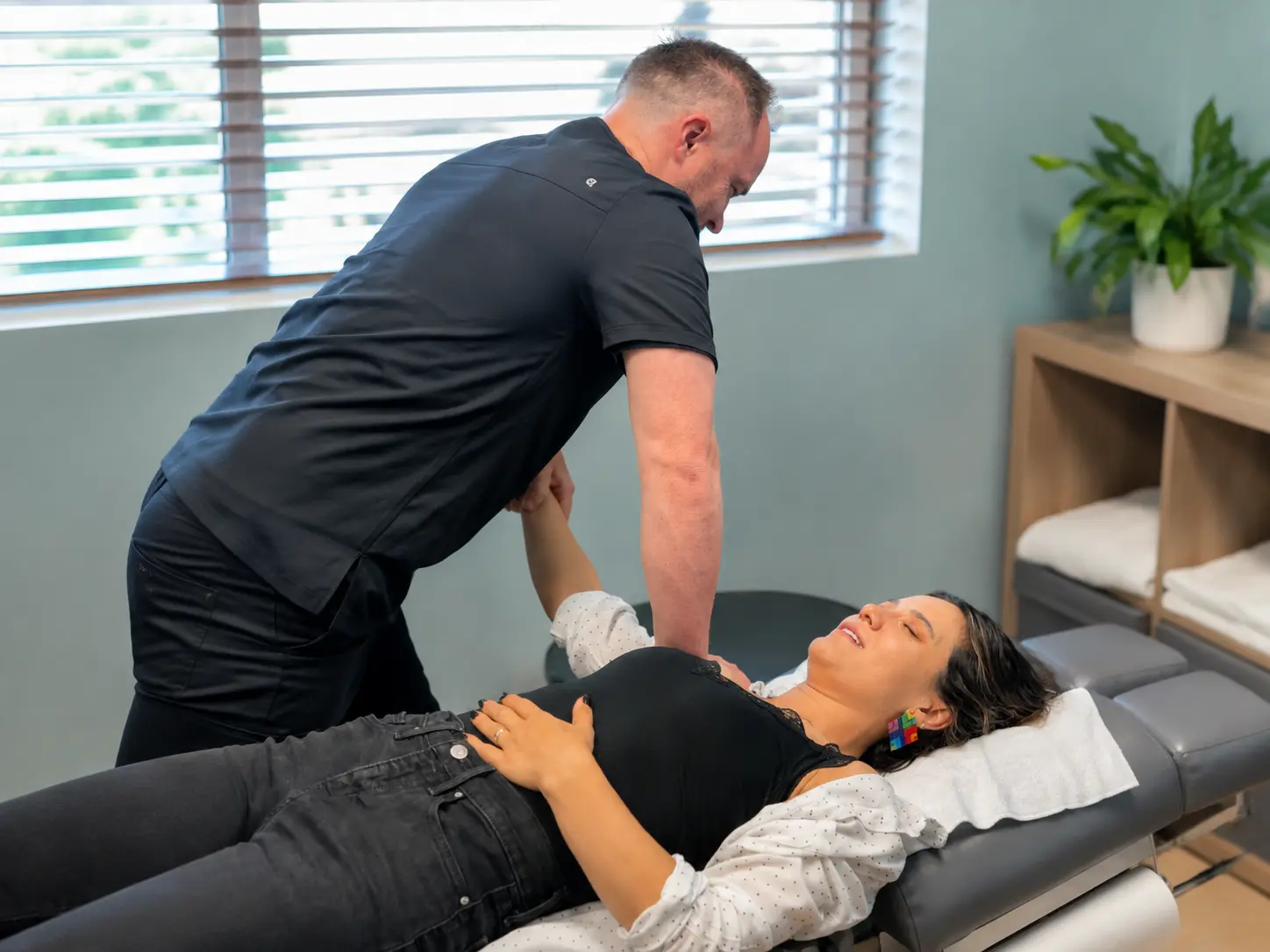
Flexion-distraction is a lower-force chiropractic technique performed on a specialized table. Dr. Peterson guides the table through slow, controlled movement while applying gentle contact to the spine.
What it is and why we use it
The moving section of the table allows the lower back to bend in a controlled way. Treatment may also include small amounts of side-to-side motion or traction based on the examination and your comfort.
This technique is sometimes chosen when a patient prefers a gentler approach or when controlled repetitive movement fits the treatment goal. It is not a guaranteed solution for a disc or nerve problem.
Your visit
We first determine whether your symptoms and examination fit this approach.
You lie on the specialized table while support and contacts are adjusted.
Dr. Peterson guides slow table motion and checks your response throughout.
Movement, symptoms and tolerance are reviewed before planning the next step.
During and after care
Safety first
Flexion-distraction is not appropriate in every case. Recent fracture, severe osteoporosis, instability, certain vascular conditions, progressive neurological findings and other concerns may require modification, imaging or medical referral.
Common questions
The movement is controlled and adjusted to your tolerance. Tell Dr. Peterson immediately if a position or motion increases symptoms.
Flexion-distraction generally uses slow table-assisted movement rather than a rapid thrust, so a popping sound is not the goal.
No. Technique selection depends on the overall examination, and a webpage cannot determine whether it fits your particular diagnosis.
Explore other options
Ready to talk?
Book online, or call the office if you would like help choosing the right starting appointment.