Now Accepting New PatientsAppointments available — book your first visitBook now Mon–Wed 9–5 · Fri 8–2801-893-1010
← All sports & activities

Throwing-athlete injury care · Lehi, Utah

Baseball & Throwing Injury Care in Lehi, Utah

Baseball and softball throwing transfers force from the ground through the hips, trunk, shoulder, elbow and hand. Pain can reflect local tissue overload, workload changes or a problem elsewhere in that chain, whether the athlete pitches, catches or plays another position.

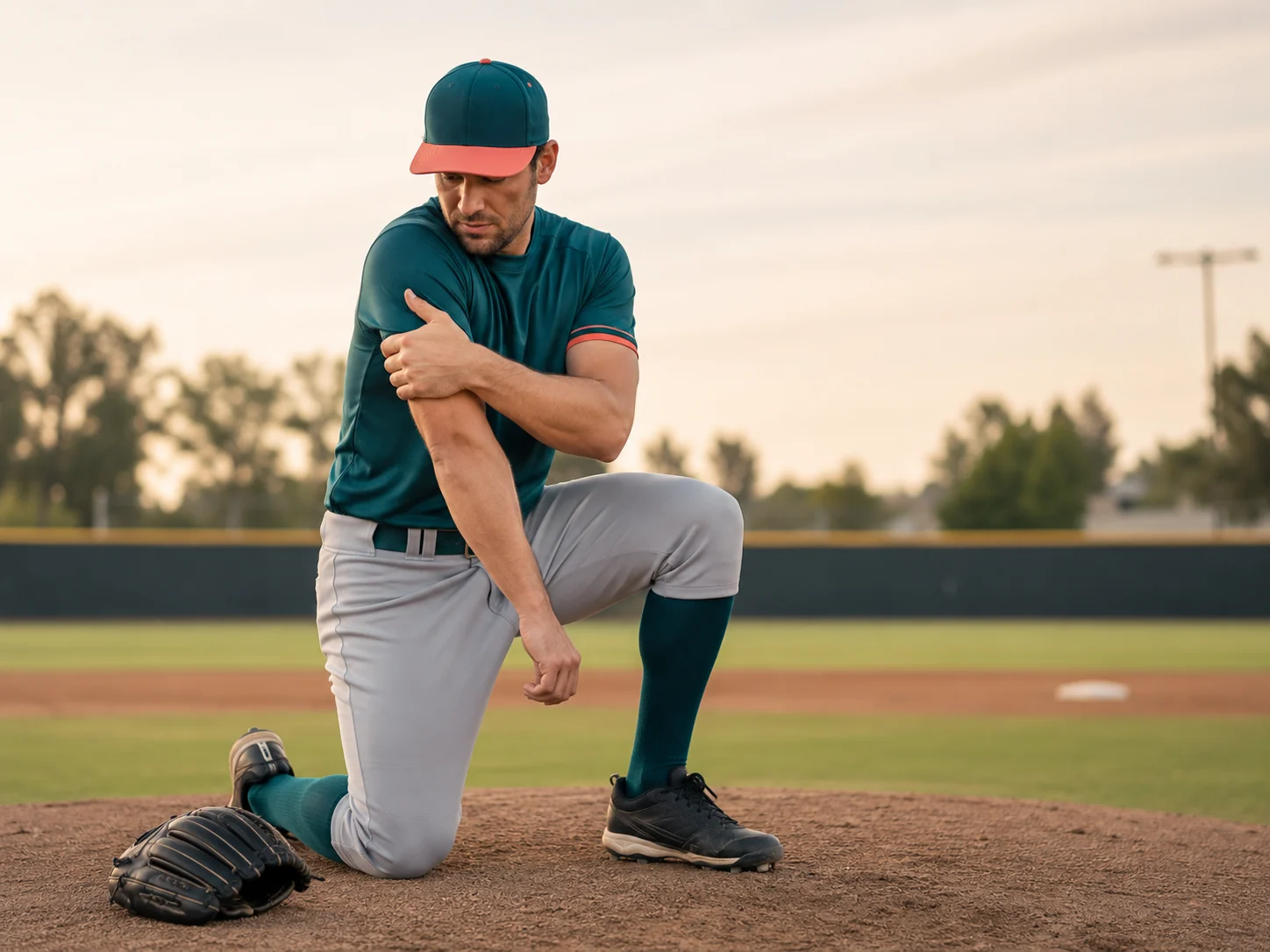
Adult baseball pitcher holding his shoulder on a field for throwing athlete injury chiropractic care in Lehi Utah

What the activity demands

Why This Activity Can Challenge the Body

Injury rarely comes down to one “bad” movement. Symptoms often reflect a combination of workload, recovery, previous injury and the specific positions or forces the activity requires.

  • Repeated high-speed throwing
  • Hip-to-shoulder separation and trunk rotation
  • Overhead shoulder control
  • Practice, bullpen and game workload

Common questions

Baseball & Throwing Athletes Injury FAQs

Should a young pitcher throw through elbow soreness?

No. Persistent or recurring elbow pain in a growing athlete should not be thrown through. Stop throwing and arrange an appropriate evaluation, particularly when pain affects control, velocity or normal arm use.

Do bullpen, showcase and travel-team pitches count?

Yes. Workload should include games, bullpens, showcases, lessons and high-intensity throws across every team. Pitch Smart limits and required rest are based on the athlete's age and total workload.

When might shoulder or elbow pain require imaging?

Imaging may be appropriate after a sudden pop, major weakness, loss of control, significant swelling, persistent pain in a growing athlete or examination findings suggesting a bone, growth-plate, ligament or other structural injury.

Can chiropractic care improve pitching mechanics?

We can assess movement, strength and how symptoms affect throwing, but no single mechanical change fixes every injury. Workload, recovery, growth, conditioning and the specific diagnosis also matter.

How long should a pitcher stop throwing?

The answer depends on age, symptoms and the injury. Pitch Smart provides age-specific rest guidance, while an injured athlete may need a longer period and medical or sports-medicine direction.

When can throwing begin again?

A return typically starts after comfortable daily arm use and appropriate motion and strength. Throwing then progresses by distance, volume and intensity while monitoring symptoms and recovery before mound work or unrestricted play.

Common concerns

Injuries We Commonly Evaluate

These are examples—not a diagnosis. Similar symptoms can come from different tissues or conditions.

A practical plan

What You Can Do—and How Chiropractic Care May Help

At home

Start With Sensible Load Management

  • Stop throwing through sharp shoulder or elbow pain
  • Track pitches, innings, bullpen work, showcases and high-intensity throws across every team—not only games
  • Follow age-specific Pitch Smart pitch-count and required-rest guidance
  • Maintain comfortable lower-body and trunk training
  • Resume throwing through a planned progression rather than testing maximum effort
At our Lehi office

Care Based on Your Findings

  • Compare shoulder, elbow, trunk and hip findings
  • Screen for injuries that need imaging or sports-medicine referral
  • Use appropriate manual care to support motion
  • Coordinate strength, workload and a progressive throwing program

Returning to activity

Build Back in Stages

Feeling better is important, but returning well also involves motion, strength, sport-specific tolerance and confidence.

General health information: MLB Pitch Smart

  1. 1Pain-free daily use of the arm
  2. 2Appropriate shoulder and elbow motion and strength
  3. 3Tolerated interval throwing at increasing distance and intensity
  4. 4Recovery remains acceptable before mound work or unrestricted play

Safety first

When to Get Medical Help Quickly

Prompt evaluation is needed for a sudden pop, major loss of throwing control or strength, visible deformity, significant swelling, numbness, a cold or pale hand, or persistent elbow pain in a growing athlete.

Start with an evaluation

Ready to Get Back to Your Activity?

We will listen, assess the concern and explain whether care at our office is a good fit.