Now Accepting New PatientsAppointments available — book your first visitBook now Mon–Wed 9–5 · Fri 8–2801-893-1010
← All conditions

Hip, knee, ankle & heel · Patient guide

Plantar Heel Pain

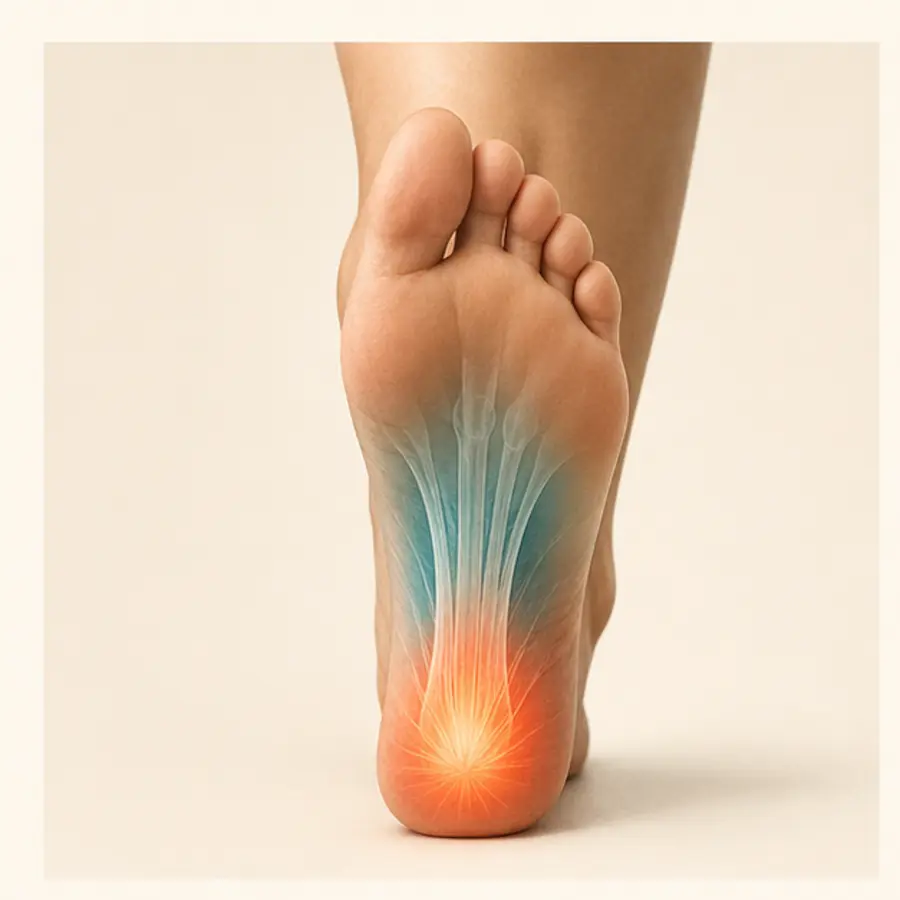
Pain underneath the heel—often worse with the first steps after sleeping or sitting—commonly involves the plantar fascia, but not every case of heel pain is plantar fasciitis.

Medical illustration of plantar heel pain and plantar fasciitis care in Lehi Utah

The basics

What It Is & How Common It Is

Pain underneath the heel—often worse with the first steps after sleeping or sitting—commonly involves the plantar fascia, but not every case of heel pain is plantar fasciitis.

Plantar-fascia irritation is one of the most common causes of pain under the heel. A typical presentation is pain with the first steps after rest that eases as the foot warms up, then returns after prolonged standing, walking or running. Rapid activity changes, hard surfaces and limited foot or calf capacity may contribute. Heel spurs can exist without symptoms, and focal bone pain, nerve symptoms, Achilles pain and inflammatory or systemic concerns should be considered when the pattern is different.

Common questions

Plantar Heel Pain FAQs

Is plantar fasciitis usually worst with the first steps?

Often. A common pattern is pain underneath the heel with the first steps after sleeping or sitting that eases after warming up and may return after prolonged activity.

Does a heel spur cause plantar fasciitis?

Not automatically. Heel spurs may be visible in people without pain, so symptoms and examination findings matter more than the spur alone.

Should I stop walking or running completely?

Complete rest is not always necessary. Temporarily adjusting the amount or intensity of activity while maintaining tolerable movement and rebuilding calf and foot capacity is often more practical.

Can Shockwave Therapy be used for persistent heel pain?

Shockwave Therapy using SoftWave technology may be considered for selected persistent soft-tissue concerns after an evaluation. It is not automatically appropriate for every cause of heel pain.

When could heel pain be a stress injury or another condition?

Seek evaluation for focal pain that worsens with impact, severe swelling, inability to bear weight, pain after a significant injury, numbness, fever, redness or a wound.

Practical next steps

What You Can Do—and How We Can Help

At home

Start With Sensible Self-Care

  • Adjust running or standing volume temporarily
  • Use supportive, comfortable footwear
  • Use comfortable calf and plantar-fascia mobility
  • Rebuild calf and foot strength progressively
At our Lehi office

Care Built Around Your Findings

  • Confirm the pattern and screen for other causes
  • Assess foot, ankle and lower-limb movement
  • Use appropriate joint or soft-tissue care
  • Plan progressive loading and discuss Shockwave Therapy when appropriate

Safety first

When to Get Medical Help Quickly

Seek prompt evaluation for severe swelling, redness, fever, numbness, a wound, inability to bear weight, pain after a significant impact or focal heel pain that worsens with exercise.

A clear plan starts with an evaluation

Ready to Talk About Your Plantar Heel Pain?

We’ll listen, assess your movement and explain whether care at our office is a good fit.